Fatigue Links
Introduction To Fatigue
Adrenal Weakness
Thyroid Problems
Sugar Disease
Toxic Gut & Food Allergies
Environmental Toxins
Sleep Disorders
Exercise Is Required

| |
Thyroid ProblemsHYPOTHYROIDISMHypothyroid is a common cause for fatigue | |

The Role of Our Thyroid Gland
The thyroid gland is located in the neck just under the Adam's apple. The thyroid gland produces the hormone thyroxin. This hormone is converted outside of the thyroid gland where it becomes activated and stimulates every one of the trillion cells in the body. Almost all of our systems and functions depend upon receiving adequate amounts of this hormone. The thyroid along with the adrenals is probably the gland most susceptible to the tremendous stress of our fast paced society. The thyroid is the body's thermostat, governing the body's temperature. The thyroid also produces hormones. These hormones work to keep stabilize our metabolic rate and balance our energy-producing process. The thyroid is essential in growth and temperature regulation. The thyroid affects all the cells of the body and is very important in both oxygen consumption of the cells and protein synthesis. If the thyroid is depleted or deficient, the rest of the body functions poorly. With low thyroid, cholesterol can shoot up to dangerous levels.
Thyroid disease, both hyperactive and under-active, is so extraordinarily prevalent today that even by conservative estimates it may strike up to 15 percent of the adult population. Women are particularly susceptible, and the disease tends to run in families. A possible reason for the increase in thyroid disease is the high prevalence of auto-immune disease today. Immunity in general is being assaulted by toxic chemicals in food, water, and air. Under-active or hypothyroid conditions can cause low energy.
"Yes" answers to the following questions may indicate a hypothyroid condition.
- Are you depressed, lethargic, and easily chilled?
- Do you gain weight easily?
- Do you suffer from chronic fatigue?
- Do you have dry skin, hair loss, eczema, or adult acne?
- Do you suffer from muscle aches, constipation, and hoarseness?
- Do you have PMS or menstrual abnormalities? Is your libido low?
- Are your feet and legs swollen and your nails brittle?
- Do you get a lot of colds and flu? Low thyroid results in increased vulnerability to infection.
A test may be taken at home to find out if the thyroid is low.
For four days keep a thermometer by your bedside. As soon as you wake up in the morning put the thermometer in your armpit for ten minutes. You must do this before you get up. If you get up first you will not get an accurate reading. If your temperature runs below 97.8 then you most likely have low thyroid. It is important to shake the thermometer after each use.Some causes of low thyroid include inheritance (runs in families), iodine depletion, exposure to x-rays or low dose radiation, air and environmental pollutants, the overuse of diet pills, anti-thyroid drugs, zinc deficiency, and deficiencies in both vitamins A and E.
Treatment for Thyroid Disorder
Avoid refined foods, saturated fats, sugars, and white flour products. If the thyroid problem is severe it is then good to avoid brussels sprouts, cabbage, broccoli, kale, mustard greens, peaches and pears as they have anti-thyroid substances and may suppress the thyroid function.
Follow a diet with at least 50 % of the foods being fresh, and organically grown to rebalance and establish a better metabolism. The enzymes from live foods help the body to maintain proper metabolism. Foods that heal include sprouts, salads, raw vegetables, and thermos cooked grains to retain enzymes which heal and feed the glands.
To help reduce deficiencies eat foods rich in vitamin A, such as, eggs, carrots, carrot juice, yellow vegetables, vegetable juices, and dark leafy green vegetables.
 M.U. Tene is concentrated Beta-Carotene, the precursor to Vitamin A and one of nature's most powerful antioxidants.
Iodine rich foods that are known to nourish the thyroid gland are: egg yolks, seafoods and sea vegetables such as: kelp, dulse, hijike, nori, arame, kombu, and wakame. Seaweeds are very easy to incorporate into vegetable dishes and salads. Also eat foods such as artichokes, onions, wheat germ, Swiss chard, turnip greens, and garlic. Eating roasted garlic with a meal is very tasty and a nice addition to any meal.
Zinc and copper are important in helping the body make thyroid hormone. Foods rich in zinc are: oatmeal, pumpkin seeds, seafood, spinach, dried beans, bran, and dried plums (prunes). Foods rich in copper are : Oysters, eggs, sesame seeds, yeast, kale, chickpeas, kidney beans, adzuki beans, shiitake mushrooms, nuts, and raisins.
Consuming foods that contain the amino acid tyrosine, found in fish, pumpkin seeds, eggs, legumes, and lentils, is helpful.
Black and red radishes have been used by some doctors in the old Soviet Union as accepted medical treatment for hypothyroidism. Raphanin, the main sulphur component in radishes, is chiefly responsible for keeping the production of thyroxine and calcitonin (a peptide hormone) in normal balance. Seeds and nuts, seed and nut milks, vegetable juices (celery, parsley, small amount of carrot, Swiss chard, wheat grass) and plenty of green drinks containing chlorophyll for healthy blood are helpful.
Other beneficial ingredients for vegetable juice combinations include: alfalfa, all leafy greens, beet tops, carrots, celery, green peppers, parsley, seaweeds, sprouts, and watercress.
Vitamin/Mineral Therapy
 Vita Balance 2000 is a
properly balanced, vitamin and chelated mineral complex, containing these vitamins and minerals and more.
Vita Balance 2000 is a
properly balanced, vitamin and chelated mineral complex, containing these vitamins and minerals and more.
- B-Complex vitamins to help improve cellular oxygenation and energy, build the adrenals and the thyroid and calm the nerves.
- Vitamin A assists in maintaining normal glandular function. M.U. Tene is concentrated Beta-Carotene, the precursor to Vitamin A and one of nature's most powerful antioxidants.
- Vitamin C promotes normal adrenal function and glandular activity. Magnum C is an improved form of C known as "Ester C".
- Essential fatty acids are a must for glandular health and they improve over all health. These can be omega 3's and 6's from marine lipids, flax oil or flax seed, black current seed oil, evening primrose oil, or borage oil. New Life 1000 provides essential fatty acids from cold water salmon oil. Life Plus provides essential fatty acids from Blackcurrent Seed Oil.
- Multi-minerals either liquid or chelated form. All minerals are involved in glandular heath. Vita Balance 2000 is a properly balanced, vitamin and chelated mineral complex. It includes all the trace minerals and a herbal base of related micronutrients.
- Calcium / magnesium, manganese, selenium, silicon and zinc protect the glands. High Grade Calcium Complex provides a microcrystalline form of calcium, plus a balance of associated nutrients necessary for proper calcium assimilation.
- Iodine supplementation from kelp or dulse, 225 -1,000 micrograms a day.
- Desiccated natural thyroid, complete with all thyroid hormones. If the symptoms are mild this form may be enough support. If they are severe a synthetic hormone such as thyroxin may be in order.
Herbal Therapy
Irish moss and kelp are used in combination to balance hormonal deficiency. They increase the metabolic rate, thyroid activity and the detoxifying function of the body, and increase blood circulation and soothe inflamed tissues.
Black walnut has a high content of iodine and is a thyroid stimulant.
Ginseng strengthens the body.
Key Suggestions
|
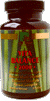
Vita Balance 2000 Vita Balance is a properly balanced, vitamin and chelated
mineral complex. It includes all the trace minerals and a herbal base of related micronutrients. An
all inclusive complex, Vita Balance 2000 takes into consideration your nutritional
needs, as well as all aspects of digestion, metabolism, and elimination.
|

Constitutional Homeopathy has been known to dramatically reverse imbalances and may effectively reverse low thyroid status.
Aerobic exercise such as jumping on the trampoline or fast walking 3 or 4 times a week may enhance one's nutritional program and help to strengthen the thyroid.
Meditation and visualization using color therapy may be helpful. Visualize a beautiful blue light and breathe the color into the thyroid area. Blue is a very soothing and healing color. It quiets down our energy. |
The use of "toning" or singing the tone of G may also help to balance and stimulate the throat area. Make a long sound using the vowel ih as in the word (bit).